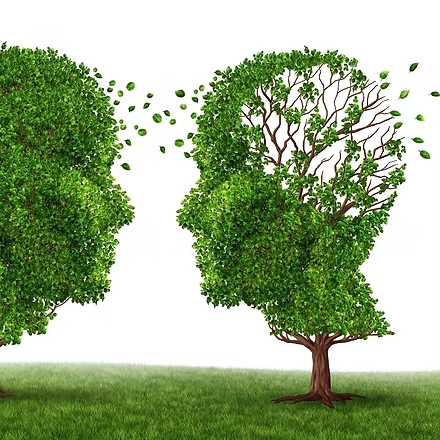
What is dementia?
Our memories can be triggered by many of our senses …
A white Christmas – a holiday in New York or overlooking the Tuscan countryside – the birth of a first child
All of these events which frame our lives and depict us as individual human beings are indeed built from our library of unique and very personal memories. They outline our experiences, the people we know, the things we’ve done, how we think….
In short – they define who we are!


Sounds
a Beatles song comes on the radio and takes you back to a holiday you took with friends in the “swinging sixties”!

Taste
the taste of a cream soda your grandchild shares with you instantly transports you back to a summer fete and the long hot summers of your childhood.

Smell
wandering around a garden centre, you stop to smell a flowering honeysuckle and instantly recall the house and garden of your early marriage where your first child was born……
What is dementia?
Dementia is a general term for a decline in memory, thinking, and reasoning skills that is severe enough to affect daily life.
It’s not just normal forgetfulness with age—it’s caused by damage to brain cells, making it harder to remember things, solve problems, or communicate.
Dementia is an umbrella term used to describe various types of dementia; some common ones include-
• Alzheimer’s disease – The most common type. It usually starts with memory problems and difficulty finding words, then gradually affects thinking, reasoning, and daily activities.
• Vascular dementia – Caused by reduced blood flow to the brain, often after strokes or small vessel disease. Symptoms can appear suddenly and may include slowed thinking, trouble planning, or changes in mood.
• Lewy body dementia – Linked to abnormal protein deposits in the brain. People may have vivid visual hallucinations, sleep problems, and movement difficulties (similar to Parkinson’s), along with memory and thinking changes.
• Frontotemporal dementia (FTD) – Affects the brain’s front and side areas. It often appears earlier in life (50s–60s) and causes major changes in personality, behaviour, language, or judgment rather than memory at first.
• Mixed dementia – When someone has more than one type, often Alzheimer’s disease combined with vascular dementia or Lewy body dementia.
When things go wrong:
As we age, the memory, similarly to other parts of the body, is not as efficient as it used to be and forgetfulness becomes more commonplace.
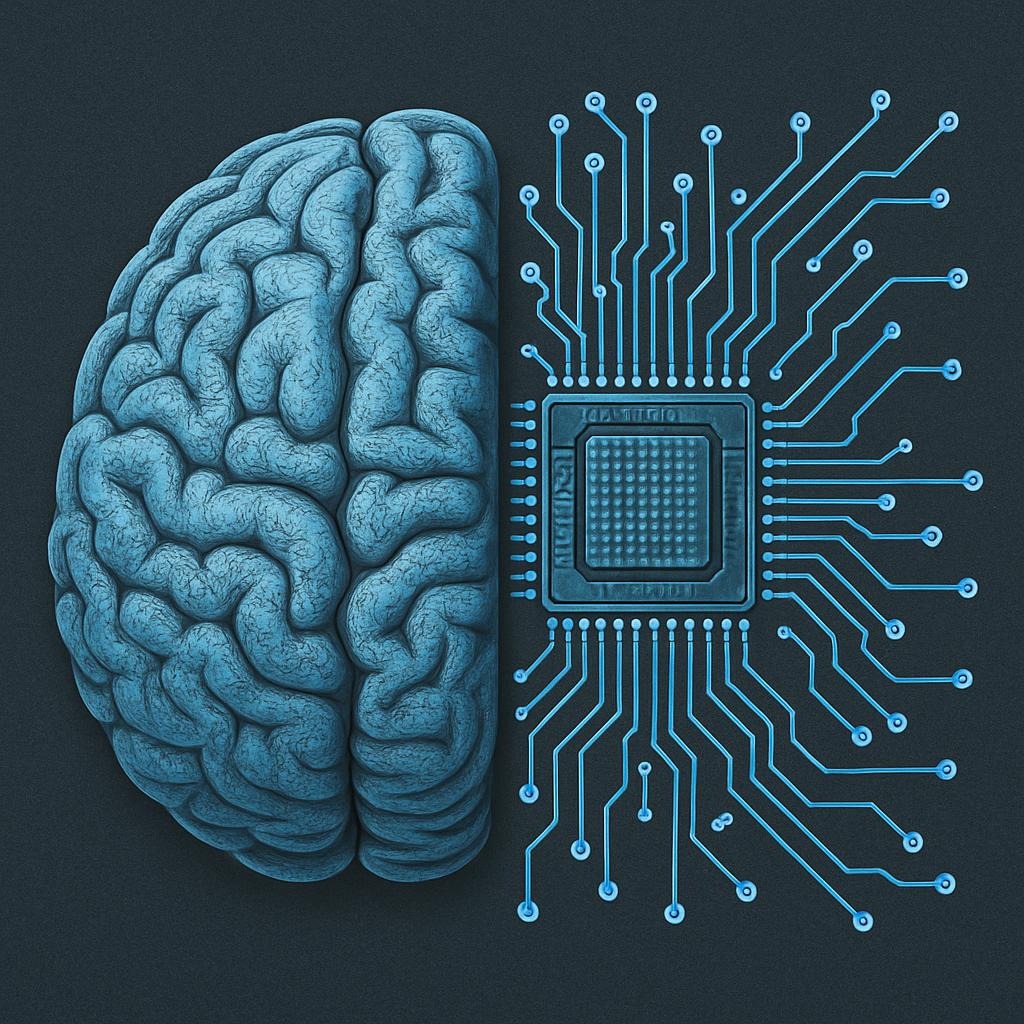
Your brain is a complex structure and works very similarly to a computer, ‘saving’ and ‘filing’ various pieces of information in different parts of the organ. Thousands of these facts and figures are stored away ready to be ‘recalled’ and used at a later date.
As we age this ‘recall’ process often becomes less efficient- remembering where we have left the car keys or recollecting the dentist phone number may become more problematic.
It is this initial ‘stumbling’ over words and failing of Short Term Memory at an early stage that indicates something may be wrong. How many times do we joke about these ‘senior moments’? Most people fall victim to incidents at some time or other and in most cases can attribute it to tiredness, overwork, lack of concentration…maybe depression, anxiety….. too many things happening all at once in a busy life.
But if it is a persistent deterioration in memory causing difficulties in for example, word selection, conversation, problem solving, that frequently affects daily living- preventing you engaging in activities you previously assumed as ‘normal’- it needs reviewing and assessing.
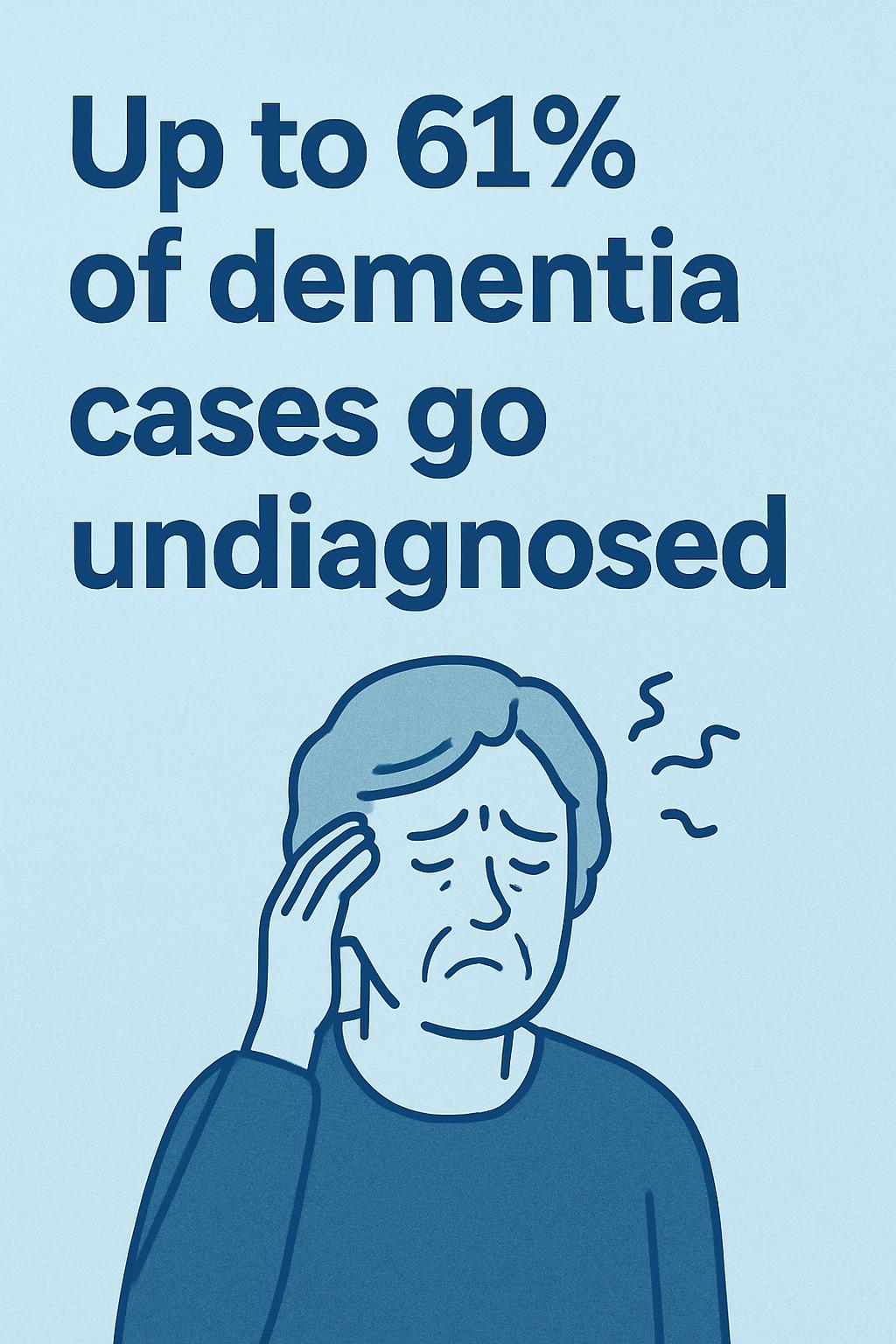
Early intervention is key
Recent promising research suggests certain types of dementia /cognitive impairment can indeed be prevented and some dementia symptoms delayed. Thus early interventions and screening is crucial.
Alzheimers Disease affects over 900,000 people in the UK and is a physical disease affecting the brain. Amyloid plaques and neurofibrillary tangles develop in the brain causing the death of healthy neurons.
It is estimated that these pathological brain changes develop over some 20-30 years before signs and symptoms are detected with earliest signs in the fifth decade of life; plaques and tangles then spread up to involve cortical regions progressively.
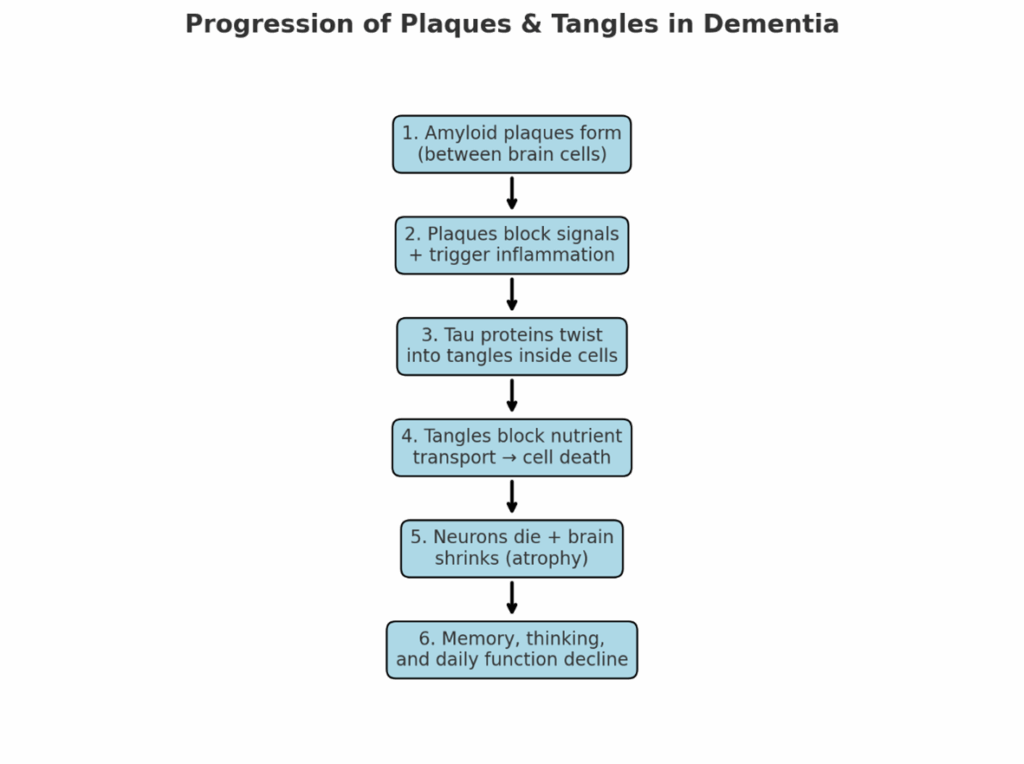
- The changes that cause so much disruption are thought to be caused by –
- Amyloid plaques
-Made of abnormal protein clumps (beta-amyloid) that build up between brain cells.
-They block communication between neurons and trigger inflammation.
-Over time, this disrupts the brain’s wiring, slowing thinking and memory. - Neurofibrillary tangles
-Form inside brain cells when a normal protein (tau) twists into harmful tangles.
-These tangles choke off the cell’s transport system, so nutrients and signals can’t move.
-The affected neurons eventually die. - Progression of damage
-Plaques and tangles usually start silently years before symptoms.
-As they spread through memory and thinking areas (like the hippocampus and cortex), brain cells die in large numbers.
-This leads to shrinking (atrophy) of the brain and worsening dementia symptoms.